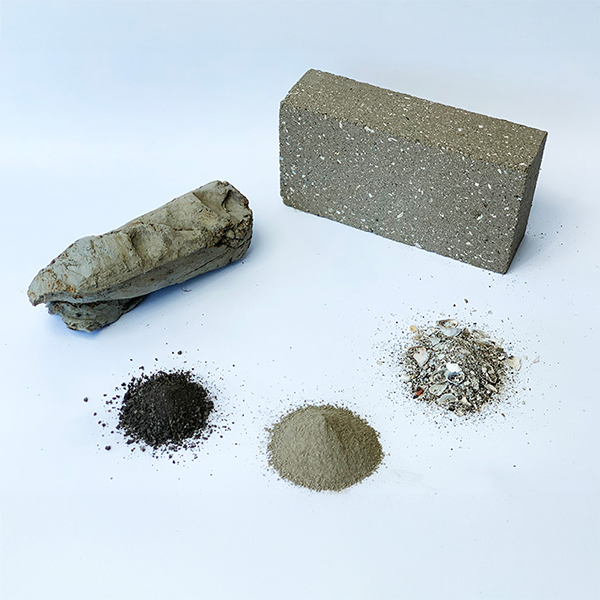
In this edition, taskforce member Stefan Fahrngruber, Creative Director at Studio MAST, speaks with Alice Andersen, Senior Producer at Random Studio.
Random Studio operates at the intersection of spatial design, technology, and applied innovation, creating immersive environments and prototypes for global brands. Their collaborations with companies like Nike and Glossier raise an important question: how do you work sustainably at such a scale?
Rather than treating sustainability as a constraint, they approach it as a design parameter. By working with modular systems, reusable elements, and digital layers, they reduce the need for resource-heavy, one-off installations. Their projects are often designed as systems that can evolve, be reused, or reconfigured beyond a single campaign.
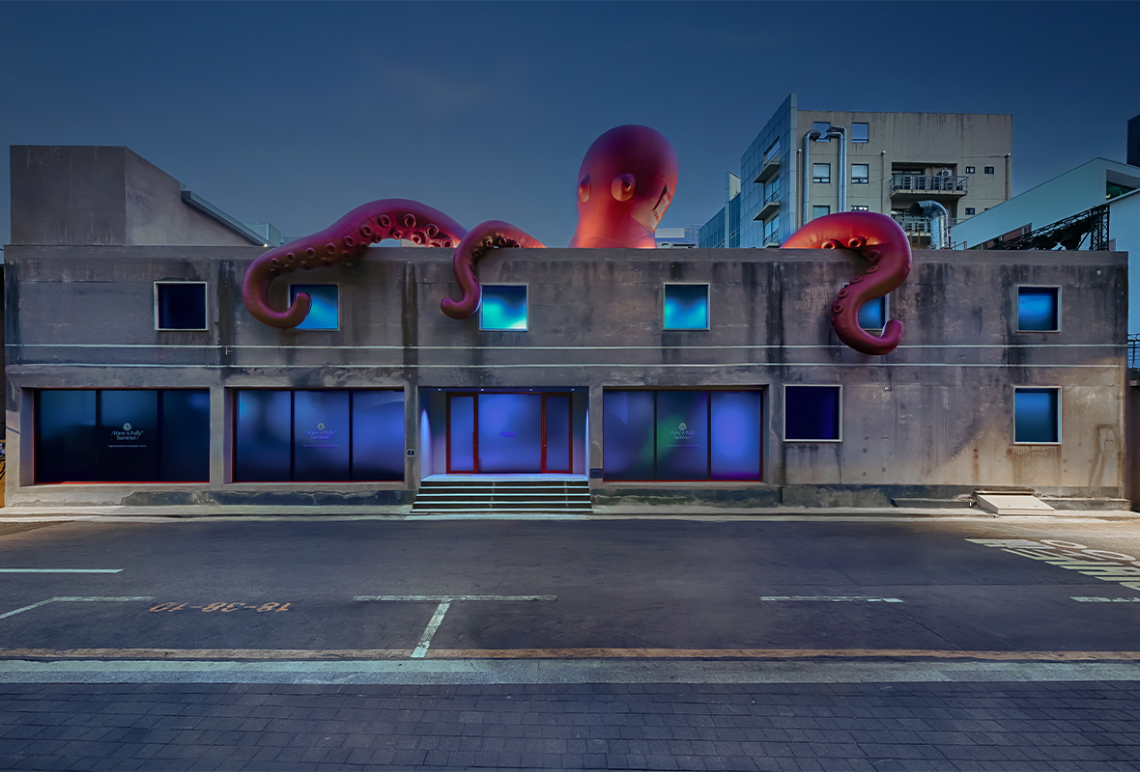
Photo: Random Studio for Moncler
Stefan chose to interview Random Studio because they operate at a scale where the impact of design decisions becomes tangible. As a Dutch B Corp working with global brands, their choices around materials, reuse, longevity, and production methods directly influence how large-scale spatial experiences are produced. This makes them a relevant case to understand how sustainability can be embedded into ambitious commercial design work without compromising creative quality.
Hi Alice, could you briefly introduce yourself?
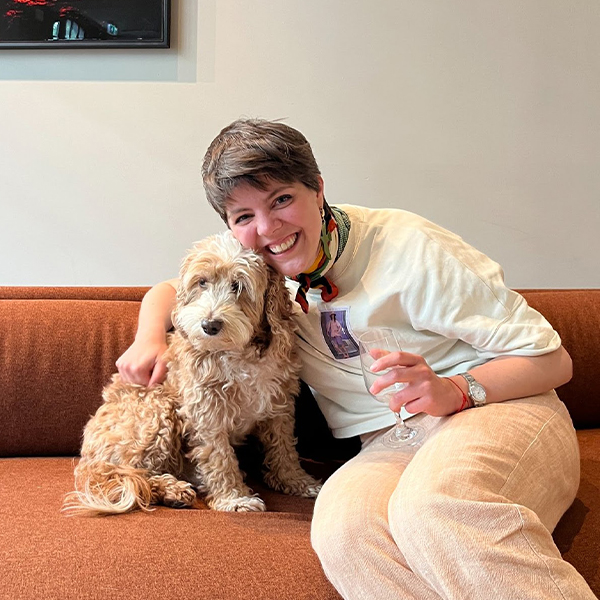 Photo: Alice Andersen
|
“I’m Alice Andersen, Senior Producer at Random Studio – we’re an experience design studio based in Amsterdam and Paris, combining spatial design and technology. We design environments that invite people to engage physically, emotionally and socially with brands, ideas, each other and their surroundings. Our work includes exhibitions, retail environments and applied innovation, where we help brands explore and prototype future physical experiences. |
Here, I am part of our internal B Team, an employee-led initiative focusing on enhancing our internal processes and culture, strengthening the ‘we’ in our studio culture, and amplifying our impact with clients and the planet. This year, we chose to focus our efforts on three of the B Corp impact areas of sustainability, workplace culture and inclusion – which align most with our studio’s values.”

Photo: Random Oerol Trip
In what ways does sustainability play a role in your design practice?
“Sustainability plays a role both in how we run the studio and in how we approach design. As a B Corp, we now have frameworks that help us think about environmental impact, workplace culture and inclusion, but for us it goes beyond certification (and recertification every 3 years). In fact, the sustainability aspect of our client project builds doesn’t factor meaningfully into our own overall score – this is something that we pay extra attention to as it’s important to us.
In our team’s design practice, it often comes down to the everyday decisions inside a project: engaging/educating our clients in conversations on the topic in the early days of a project, what materials we propose (or leave out), how something is built, what technologies and hardware is used/reused, whether elements can be disassembled and reinstalled, whether we can work with local production partners, and what happens after an installation comes down.
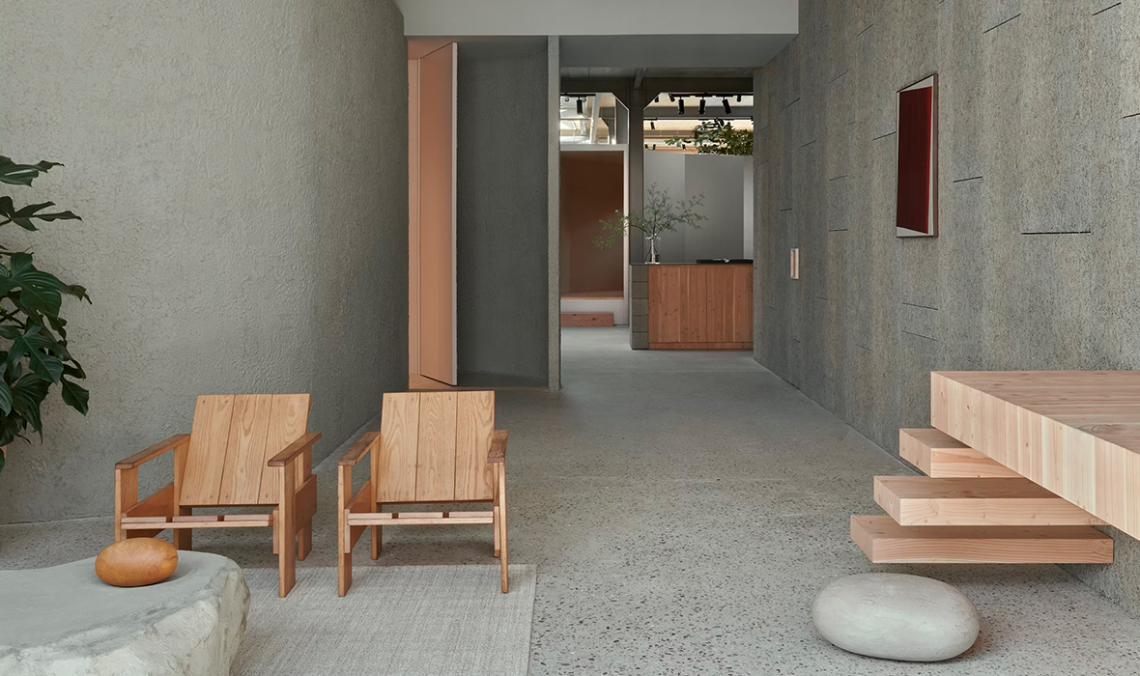
Photo: Random Studio
We work in a field where temporary builds are often part of the reality. Our work also weaves interactive technologies into physical spaces to create a sense of wonder – the hardware required for this can be resource/energy intensive. So we try to be honest about the contradictions we hold. We do not claim that everything we do is fully sustainable. That said, we truly believe designers hold real influence, especially when these questions are considered early on.
Our studio space in Amsterdam was built with sustainability as a cornerstone. The studio used to be a car repair workshop, and was fully redesigned with sustainable materials in mind. If you’re curious to dive deeper, read about it here. 100% of our energy comes from renewable sources and heat pumps, our daily lunch is vegetarian/vegan (good for the soul and planet), and we favour train travel – and track trips that cannot avoid a flight and offset these tenfold.”
“Sustainability plays a role both in how we run the studio and in how we approach design.”
–
Alice Andersen, Random Studio
What project have you worked on that focused on sustainability?
“Most recently, we collaborated with de Bijenkorf in Amsterdam on the redesign of the women’s floor, which will open at the end of the year. Sustainability is a key priority for our client – so this was a part of conversations from the very beginning. In fact, one of our main points of contact, Gonnie Janssen, was hired as a Design Manager specifically to drive this effort forward. This meant sustainability was deeply considered at all levels: client, designers, and builders. A dream project, where the stars aligned. We learned as much from our partners as we brought to the table.
During the design phase, we explored and proposed sustainable materials, we conducted extensive sampling and connected with a number of local suppliers (Plasticiet, Cooloo, among others). We also involved Rick Porcelijn, a sustainability consultant, at three key moments: first, to lead an introductory workshop on lifecycle assessments (LCA), then to assess our design to make even more recommendations (biodiverse materials, mechanical assembly methods, cladding fixtures to reduce metal usage), and lastly to conduct an overall CO2 impact calculation/reduction. Fiction Factory, whose core focus is on sustainability in production, were selected as the primary builders of fixtures.”

Photos: Bijenkorf materials
What are you currently working on in terms of sustainability?
“The B Team is an initiative which grew out of our annual studio survey. The name is a nod to B Corp and the idea of humble leadership (as opposed to the A Team). Our focus is to distill what being a B Corp means in practice to our teams, create employee resources, and last but not least encourage and empower action at an employee level.
Will Grant, educator and activist, outlines four levels of action for creating environmental and community change:
1. Individual Level
2. Friends and Family
3. Community and Local Institutions – this includes the workplace
4. Policy and Larger Institutions
The environmental movement has given a message about taking action at level 1 and level 4: change individual actions, sign this petition, lobby this person. But our greatest and most immediate impact is actually at level 2 and especially level 3. As part of our studio, we’re not a number, we can influence our workplace, clients and partners.
In our efforts to create this ‘ripple effect’ of impact with the B Team, we have created a sustainability phase-by-phase checklist, organised annual visits to Material District to inspire our designers on sustainable materials, and introduced the idea of ‘finding your thing’ inspired by our 3 focus pillars: sustainability, workplace culture and inclusion. My ‘thing’ at the studio has been to bring our kitchen scraps to our nearest Afval Naar Oogst compost location.”
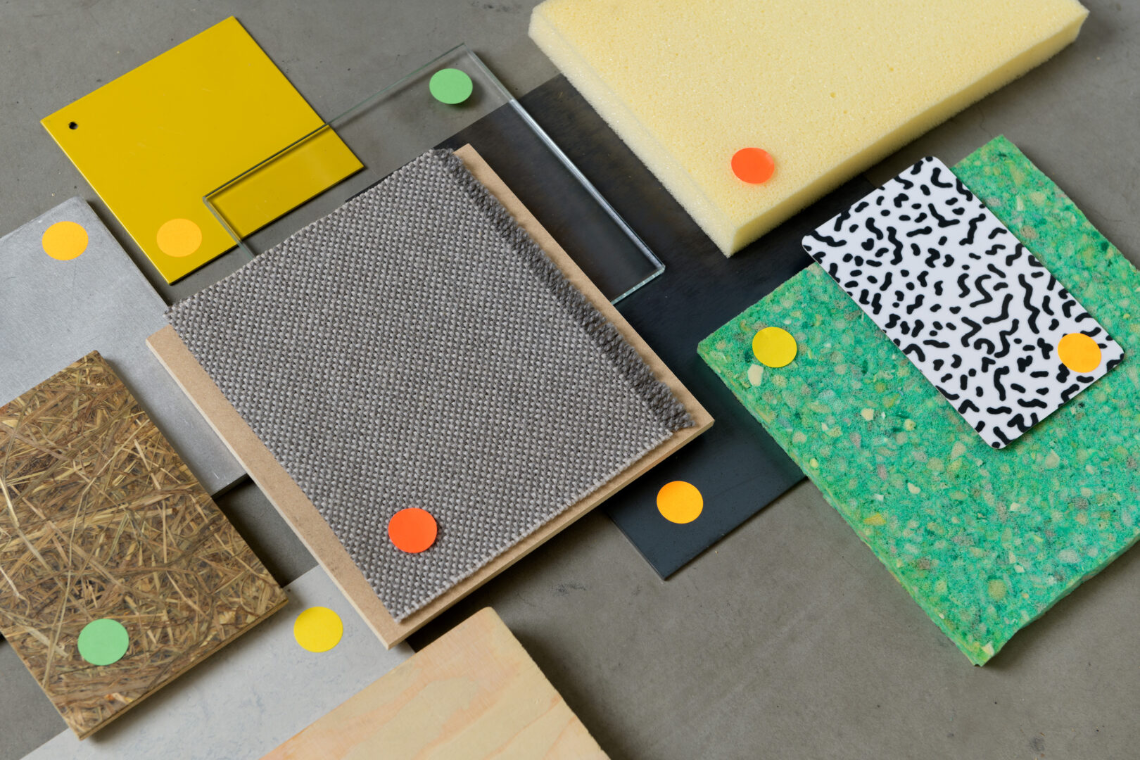
Photo: Inter Matter materials
Which three examples, designers, or projects inspire you in the field of sustainability and design?
“1. Marije Remigius: is an interior builder with the mission to build all interiors sustainably. She offers one-off workshops on sustainable materials through her learning platform Circu Leren. She consults on circular exhibition project via Inter Matter, where she created a freely accessible digital Material Library for designers to quickly get an indication on the sustainability of popular materials – which are graded using an intuitive six-color scale: ranging from Blue (best practice) to Grey (avoid at all cost). She also co-founded Jutplaats, a marketplace for second-hand interior design projects and materials.
Listen the Circular Pioneers podcast episode, it is a great intro to some key design principles: round is not circular, less is more, design for disassembly, and use good materials.
2. Rick Porcelijn: also helps companies create designs with lower CO₂ emissions through his company 16 Mammals. We collaborated on de Bijenkorf project, and learned a lot in the process. Building on the IDEMAT app, he chose to focus especially on CO₂ impact and reduction (compared to Eco Costs) and take a numbers-based approach that makes it easier for large companies to quantify their impact. He recently launched an open source CO₂ Snelstart Tool for designers to make early and quick comparisons between different materials’ CO₂ impact in kg.
Read his book Snelstartgids Circulaire Meubels aka Quickstart Guide to Circular Furniture (English PDF available on request from the author) is a great practical guide and deeper dive into circular design.
3. Dr. Ayana E. Johnson & Dr. Katharine K. Wilkinson: are two climate powerhouses, Johnson is a marine biologist and podcast host of ‘What If We Get It Right?’ and ‘How To Save A Planet’, and Wilkinson editor-in-chief at Project Drawdown and podcast host of ‘A Matter of Degrees’. Together, they edited a book called ‘All We Can Save’ – a collection of essays, poetry and art with expertise and insights from 60+ women leading on climate solutions and activism in the United States – to “pass the mic” to other women doing groundbreaking climate work.
Connect to All We Can Save Project, it is a structured book club based on this anthology, which we held at the studio over lunch among colleagues. It’s a beautiful way to engage in meaningful conversation on climate with your community.”

Photo left: Inter matter | Photo right: All we can save project
Bonus
“I once heard that one of the most powerful things we can do to inspire (climate) action is telling your story. From being a drop in the ocean, this drop ripples out – your story naturally ripples to touch others. This reminds me of a quote from Octavia E. Butler: “All that you touch you change. All that you change changes you.” With this comes one last personal source of inspiration: Imagine5, a magazine based in Amsterdam, which collects hopeful stories from around the world of all the ways big and small that everyday humans are taking action to live in harmony with our planet. Sign up for their newsletter, or buy a hard copy of their annual magazine as an antidote to apathy.”
About the taskforce Sustainability
|
The climate crisis is one of the greatest challenges of our time. Design has a crucial role to play in developing solutions—but only if we fully understand and harness its potential. Only then can design truly contribute to a future that is both socially and economically sustainable. Through the taskforce Sustainability, thirteen BNO members have joined forces to help accelerate the transition to a sustainable and circular world. |